
A polished brand video is no longer enough to move a technical buyer. Manufacturing teams are under pressure to shorten sales cycles, improve lead quality, support distributors, and justify every marketing spend. That is why manufacturing video marketing trends are shifting away from one-off creative projects and toward video systems that support revenue, sales conversations, and operational efficiency.
For manufacturers, the question is not whether video matters. It is which types of video actually help buyers understand complex offerings, trust your capabilities, and take the next step. The strongest trend lines all point in the same direction: practical content, tied to a business objective, distributed where buying decisions happen.
1. Manufacturing video marketing trends are moving from brand awareness to sales enablement
A few years ago, many manufacturers invested in video mainly to look more modern online. Today, leadership teams expect video to help sales teams close business. That changes both the content strategy and the way success is measured.
Instead of putting most of the budget into a single company overview, manufacturers are building libraries of sales-ready content. That often includes product videos, process explainers, facility walkthroughs, customer-facing FAQ videos, and short clips that answer objections before a call. These assets give sales teams something useful to send after an intro meeting, before a plant visit, or during a long evaluation cycle.
This trend matters because industrial purchases rarely happen after one touchpoint. Buyers need repeated proof. They want to see how a machine works, how clean and organized a facility looks, how a process is controlled, and whether your team understands their application. Video can answer those questions faster than a PDF and with more credibility than a generic pitch deck.
There is a trade-off, though. Sales enablement video is less glamorous than a cinematic brand piece. But for manufacturers selling complex or high-ticket solutions, it usually produces more measurable value.
2. Short-form video is growing, but context still wins
Short-form video is influencing B2B manufacturing, especially on LinkedIn, email outreach, landing pages, and trade show follow-up. Attention is limited, and decision-makers often want a quick reason to keep engaging. A 30 to 60-second clip can introduce a product category, highlight a differentiator, or drive traffic to a deeper conversation.
That said, short does not automatically mean effective. In manufacturing, buyers often need detail. A short clip can open the door, but it rarely closes the sale on its own. The stronger approach is to use short videos at the top of the funnel and pair them with longer, more technical assets for later-stage evaluation.
For example, a short social video may highlight a machining capability or automation solution. The next step could be a more detailed product demonstration, a plant tour, or a video that answers a specific engineering or procurement concern. That sequence respects how industrial buyers actually behave.
The trend is not just shorter videos. It is better video packaging – concise entry points supported by deeper content when the buyer is ready.

3. Facility and process videos are becoming trust assets
Manufacturers often underestimate how much buyers want to see the operation behind the promise. Websites can claim quality, precision, capacity, and reliability. Video can show it.
Facility tours, production process videos, drone footage, and team interviews are becoming more important because they reduce perceived risk. If a buyer cannot easily visit your site, video becomes the next best thing. It helps them assess scale, cleanliness, equipment, workflow, and overall professionalism before they commit time to a sales process.
This is especially relevant for contract manufacturers, OEM suppliers, and companies competing for high-value programs where credibility matters early. When prospects can see your operation, your message becomes easier to believe.
The caution here is that these videos need strategy. A generic walk-through with music and sweeping shots may look good but say very little. The more effective version is structured around buyer concerns: quality control, throughput, specialized equipment, certifications, workforce expertise, or handling of complex parts.
A facility video should answer the question, “Why should we trust this manufacturer with our business?”
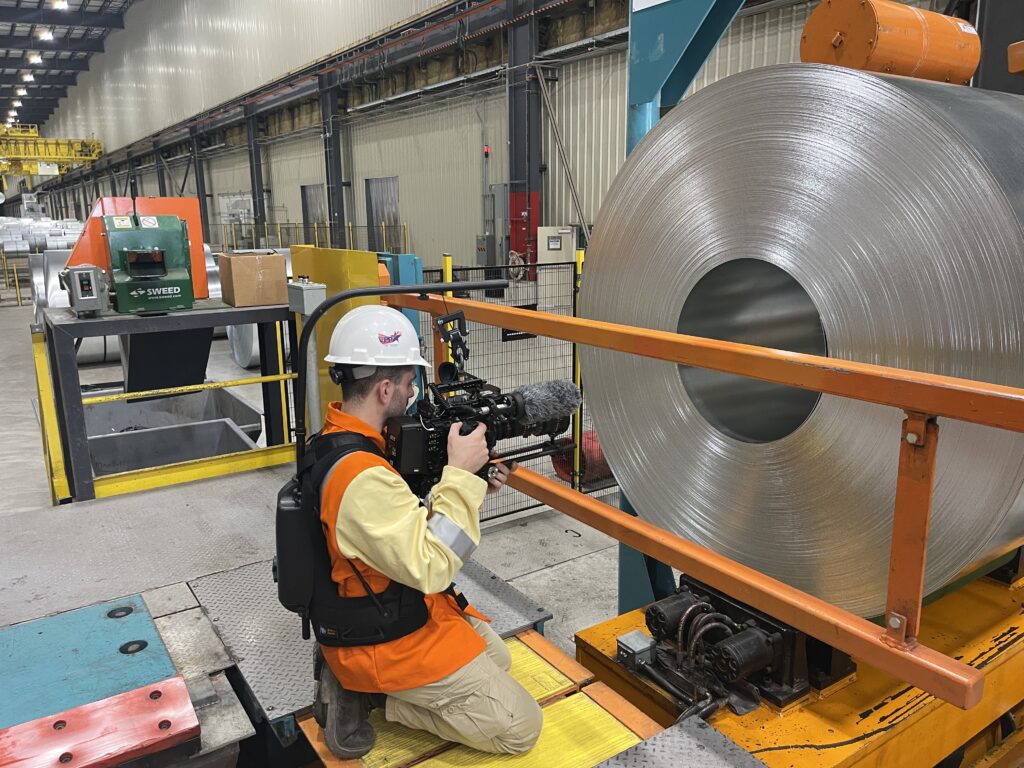
4. Product video is replacing static explanation in technical sales
One of the clearest manufacturing video marketing trends is the rise of product-focused content built for technical understanding, not just visual appeal. Buyers want to see how a product works, where it fits, what problem it solves, and what makes it different from alternatives.
This is particularly important when the product is difficult to explain in text alone. A well-planned product video can show motion, scale, workflow integration, setup, maintenance considerations, and use-case fit in a way brochures cannot match.
For manufacturers with complex solutions, multiple versions of product video often make sense.
A top-level version can support marketing and early-stage awareness. A more detailed version can support sales calls. Another can help channel partners or distributors explain the product consistently.
In some cases, animation is the best choice, especially when internal mechanics, invisible processes, or conceptual workflows need to be shown clearly.

5. Trade show video is becoming more targeted and more useful after the event
Trade shows are still a major investment for many manufacturers, but expectations have changed. Booth video is no longer just background motion meant to attract a crowd. The best teams are using it as part of a broader event strategy.
At the booth, video can quickly communicate product categories, demonstrate equipment that cannot be brought to the floor, and help visitors understand what your company does within seconds. That is valuable in a noisy environment where attention is limited.
After the event, the same footage can support follow-up campaigns, recap content, sales outreach, and social promotion. This improves the return on production because the content keeps working long after the booth comes down.
The companies getting the strongest results treat trade show video as a campaign asset, not an event decoration. That might mean producing multiple edits for booth screens, pre-show outreach, post-show lead nurturing, and sales follow-up. It requires more planning upfront, but it stretches the value of every shoot day.

6. Internal video is gaining budget because labor pressure is real
Not every manufacturing video trend is about external marketing. Internal communication and training are becoming bigger priorities, especially for companies dealing with labor shortages, multi-shift operations, safety demands, and onboarding inefficiencies.
Training videos, standard operating procedure content, and internal communication videos can reduce repetition, improve consistency, and help teams transfer knowledge faster. For manufacturers with specialized processes, that is not a minor operational improvement. It can directly affect productivity, quality, and retention.
This trend also reflects a broader shift in how leadership views video. When video is treated as a business tool rather than a marketing luxury, internal use cases become much easier to justify. A training library that saves supervisors hours each week may deliver value faster than a campaign asset aimed at awareness.
The practical point is this: many manufacturers should be planning video across both revenue and operations. The right mix depends on your current bottleneck. If growth is constrained by weak lead flow, prioritize sales and marketing content. If growth is constrained by onboarding or inconsistency, internal video may deserve immediate attention.

7. Strategy and distribution matter more than production alone
This may be the most important shift of all. Manufacturers are becoming more skeptical of video projects that end when the file is delivered. They want to know how the content will be used, who it is for, and what business outcome it supports.
That is a healthy change. Strong production still matters, especially in manufacturing where visuals need to communicate professionalism and technical credibility. But execution without strategy often leads to underused assets.
The better model starts with business questions. Is the goal to generate more qualified leads? Support a sales team with better follow-up content? Improve close rates for a specific product line? Increase booth traffic? Reduce training time? Once that is clear, the content plan, shoot plan, edit structure, and distribution approach become easier to align.
This is where specialized manufacturing experience matters. A team that understands industrial buying behavior will frame videos differently than a generalist agency focused mainly on aesthetics. The strongest programs are built around the sales process, the realities of technical messaging, and the need to get more mileage from each content investment. That is why companies like Video For Manufacturing position video as part of a commercial strategy, not just a creative deliverable.
What these manufacturing video marketing trends mean
If you are planning next year’s content budget, the safest assumption is that buyers will expect more clarity, more proof, and faster access to information. Video helps with all three, but only when it is mapped to real use cases.
A manufacturer with a long sales cycle may get the best return from an FAQ library and product demos. A company investing heavily in events may need a trade show video system that extends beyond the booth. A growing operation with hiring and training pressure may see faster gains from internal content. It depends on where friction exists in the business.
The common thread is simple. Video is becoming more useful when it is less generic. Manufacturers that win with video are not chasing trends for their own sake. They are using the right formats to answer buyer questions, support the sales team, and remove bottlenecks across the organization.
That is the better way to think about your next video investment: not as content to produce, but as work that should make your business easier to buy from, easier to trust, and easier to scale.
Reach out to us for a free strategy consultation!
See you in front of the camera.


