
A sales rep is on a call with a qualified prospect. The buyer understands the problem, likes the specs, and wants to know one thing before moving forward – how the product actually works in a real operating environment. That is where industrial product demo videos earn their keep. For manufacturers selling technical equipment, components, or systems, a strong demo video can remove friction from the buying process faster than a brochure, slide deck, or spec sheet ever will.
These videos are not about flashy production for its own sake. They are about helping engineers, operations teams, procurement stakeholders, and executive buyers see the product in action and understand what it means for their facility, workflow, or output. When done well, they support lead generation, improve sales conversations, and give prospects the confidence to move to the next step.
What industrial product demo videos need to accomplish
In manufacturing, most products are not impulse purchases. They involve long sales cycles, technical review, budget scrutiny, and multiple decision-makers. A demo video has to work inside that reality.
At a minimum, it should show what the product does, how it works, and why that matters commercially. That sounds simple, but many demo videos stop at surface-level visuals. They show moving parts, polished equipment shots, and a few broad claims. What they fail to do is connect features to operational outcomes such as throughput, labor savings, precision, safety, changeover time, maintenance reduction, or product quality.
That gap matters. Buyers are not just comparing machines or components. They are comparing risk. They want to know whether your product fits their application, whether your team understands their use case, and whether implementation will be worth the cost and effort.
A useful demo video reduces that uncertainty. It makes the technical story easier to follow and the business case easier to believe.
Why manufacturers benefit from industrial product demo videos
The most obvious value is product clarity. If your offering is difficult to explain in a few sentences, video can do the heavy lifting. Motion, process footage, close-up detail, operator interaction, and simple narration can make a complex product easier to evaluate.
There is also a sales efficiency benefit. A good demo video helps sales teams avoid repeating the same explanation on every introductory call. Instead of starting from zero each time, they can send a targeted asset ahead of the meeting or use it during the conversation to align the room faster.
This is especially useful when your audience includes mixed stakeholders. An engineer may care about technical performance. A plant manager may care about uptime. A purchasing lead may care about standardization and vendor confidence. A single well-structured video can speak to all three if the messaging is planned correctly.
Demo videos also help when in-person access is limited. Prospects may not be able to visit your facility. Your sales team may not be able to bring a machine on-site. Trade shows give you limited time and space. Video creates a repeatable product experience that can be used in all of those situations.
The best use cases for industrial product demo videos
Manufacturers often think of demo videos as website content, but their value is broader than that.
On a website, they help turn passive visitors into better-informed prospects. Instead of asking a buyer to imagine how a product works, you can show them. This tends to improve engagement and can filter out poor-fit leads while increasing confidence among serious ones.
In sales outreach, demo videos give representatives a practical follow-up asset. After an initial call, the rep can send a video that reinforces the product story and makes internal sharing easier for the buyer’s team.
At trade shows, they help solve a common problem: not every product can be transported, installed, or demonstrated live. A strong demo video lets booth visitors see the product in a real production setting without relying on verbal explanation alone.
They are also valuable in distributor and rep networks. If outside sellers need to explain your offering accurately, video gives them a consistent tool that keeps the message aligned.
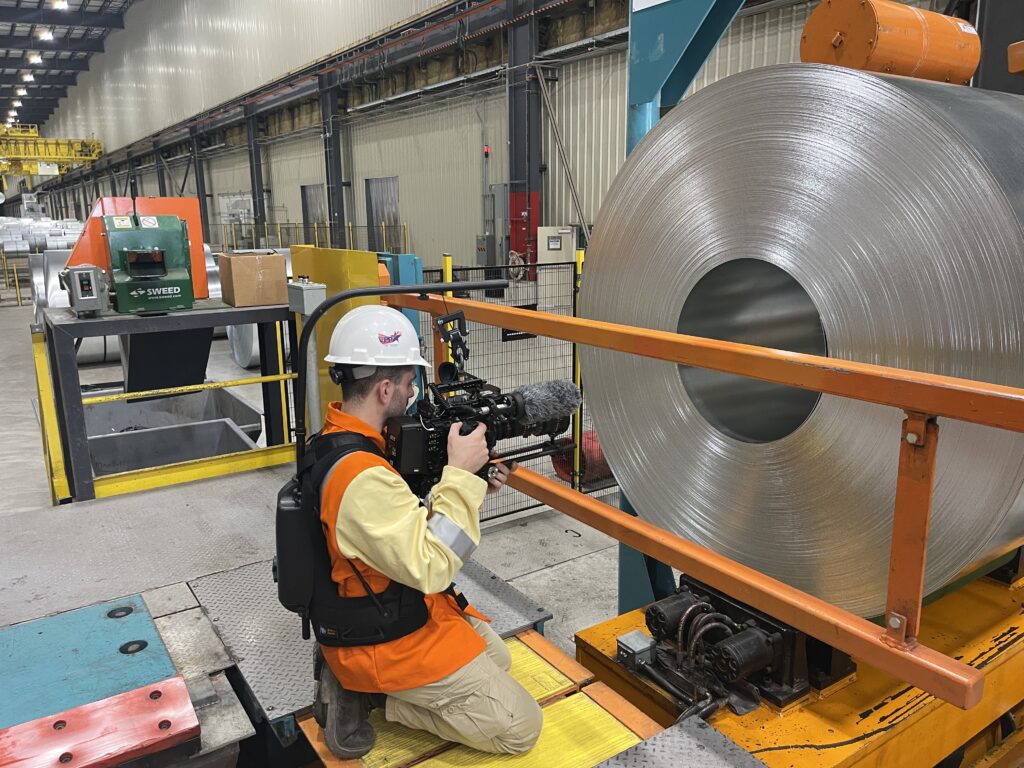
What to include in a manufacturing demo video
For most industrial products, the strongest demos combine real footage with concise explanation. Viewers should be able to see the product operating, understand what they are looking at, and quickly connect that to business value.
That usually means showing the product in context rather than isolated beauty shots. If it is a machine, show setup, operation, output, and any operator interaction. If it is a component, show where it fits within a larger system. If the differentiator is internal or difficult to film, animation can help clarify what the camera cannot easily capture.
Narration should be direct and specific. Broad claims like high quality or innovative design do not carry much weight in industrial sales. More persuasive language focuses on what changes for the customer – tighter tolerances, lower labor requirements, faster cycle times, simpler maintenance access, improved consistency, or reduced scrap.
Proof points matter too. If you have meaningful data, certifications, customer use cases, or application examples, those can strengthen credibility. Just be selective. The goal is not to cram a full sales presentation into a two-minute video.
Common mistakes that limit ROI
One common mistake is making the video too general. Manufacturers sometimes try to create one asset for every audience, every application, and every sales stage. The result is usually too broad to be persuasive.
Another issue is overemphasizing aesthetics. Production quality matters because it reflects credibility, but polished visuals without strategic messaging do not move deals forward. Buyers need substance.
A third mistake is treating the demo as a standalone asset. If the video is not tied to a specific use case such as website conversion, sales follow-up, trade show engagement, or distributor support, it becomes harder to measure and easier to underuse.
There is also the question of length. Shorter is not always better, and longer is not always worse. The right length depends on the audience and placement. A homepage demo may need to be concise. A late-stage product evaluation video can go deeper. What matters is whether every section earns its place.
How to think about ROI
The return on industrial product demo videos is rarely just views. For manufacturers, the better metrics are tied to sales movement.
That may include improved lead quality, more meeting conversions, shorter explanation time for reps, stronger trade show engagement, or faster progression from first conversation to quote request. In some cases, a demo video also reduces the burden on technical teams by answering common early-stage questions before application engineering gets involved.
This is why planning matters so much. If the objective is clear from the start, the video can be built to support a measurable business outcome rather than just look impressive in a marketing folder.
That strategic thinking is what separates a useful content asset from a sales tool. For companies with complex offerings, that difference is significant.
If your product sells best when buyers can see it work, then showing it clearly is not optional. It is part of the sales process. And when the message, footage, and use case are aligned, industrial product demo videos do more than explain a product – they help the right buyers say yes with less hesitation.
Contact us for your free consultation.
See you in front of the camera!


